Early Detection of a Rare Invasive Plant: Giant Hogweed
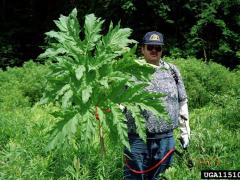
Giant hogweed (Heracleum mantegazzianum) is a rare invasive plant in Vermont, but one worth understanding.
Giant hogweed (Heracleum mantegazzianum) is a rare invasive plant in Vermont, but one worth understanding.
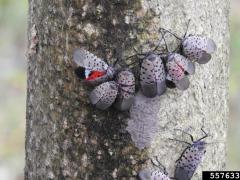
The Vermont Agency of Agriculture, Food and Markets is asking the public to keep an eye out for the invasive pest known as spotted lanternfly (Lycorma delicatula) during the spring landscaping season.
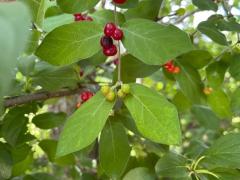
We all can help! On July 7, at 9 am join us for a honeysuckle cutting party at Dead Creek Wildlife Management Area in Addison.
The Vermont Department of Environmental Conservation (VTDEC) Lakes and Ponds Aquatic Invasive Species Program is excited to launch a brand-new community science project this summer, 2022 called the Vermont Invasive Patrollers for Animals Program
The Vermont Department of Forests, Parks & Recreation is spearheading a few projects geared towards tracking the phenology of invasive plants and we need your help!
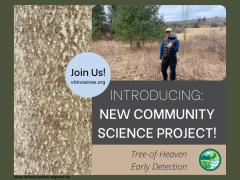
Do you want to get involved in locating Tree-of-Heaven in Vermont? Now is your chance! Tree-of-Heaven is a preferred host for the Spotted Lanternfly. The presence of these two invasive species in Vermont could have detrimental impacts on many tree species, including apple trees, sugar maples, and more.
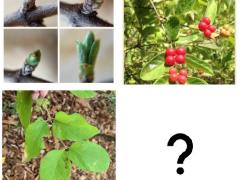
Phenology is the study of the life cycle events of living things – like tracking when plants get their leaves, their flowers, and their fruits. Knowing this information gives us a better understanding of the species in our ecosystems, can guide the timing of our invasive plant management work, and can help us track the impacts of climate change on plants in Vermont. In 2022, The Vermont Department of Forests, Parks & Recreation is spearheading a few projects geared towards tracking the phenology of invasive plants and we need your help!
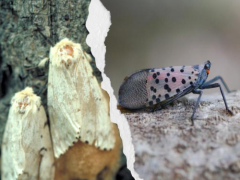
At first glance, the spongy moth and the recent invader the spotted lanternfly (whose Latin name is Lycorma delicatula) would not appear to have much in common. The spongy moth, Lymantria dispar, is a moth. Moths fall under the insect order Lepidoptera, the moths and butterflies, and are characterized by scaly wings and a long tongue. The spotted lanternfly may look like a moth, but a closer glance at their mouthparts reveals them as true bugs, in the insect order Hemiptera. This group of insects is characterized by sucking-piercing mouthparts that look like a long straw running along the underside of their bodies.
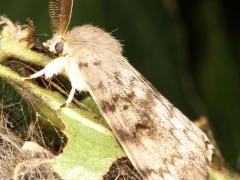
"Spongy moth" has been formally adopted as the new common name for the moth species Lymantria dispar by the Entomological Society of America.