The Spiny Water Flea: A Ticking Time Bomb for our Fisheries

The arrival of spiny waterflea is bad news for North American fisheries.
The arrival of spiny waterflea is bad news for North American fisheries.

The loss of more than 35,000 trees because of the Asian longhorned beetle was a bitter experience for many area residents. But a pancake breakfast hosted by Vermont foresters and maple sugar industry representatives Tuesday made that loss at least a little bittersweet.
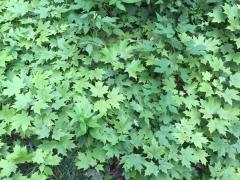
Ethan Tapper, Chittenden County Forester for the Vermont Department of Forests, Parks and Recreation, reflects on his role negotiating the relationship between humans and the forested ecosystems of Chittenden County. In this article, Ethan expresses both his admiration for the resiliency of Vermont's forests and his concern for the impacts of invasive species.
The Vermont Aquatic Nuisance Control grant-in-aid grants program is now accepting applications for 2017 projects addressing aquatic invasive and nuisance species. The applications are due no later than Wednesday, February 8, 2017.
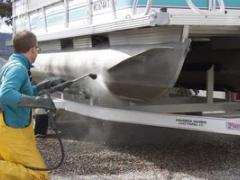
For the first time, Dreissenid mussels have been documented in a Montana waterbody. Montana had been one of only a handful of states that did not have a confirmed population.
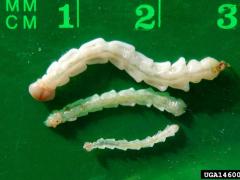
In October 2014, researchers at Wright State University discovered that an invasive insect called the emerald ash borer (EAB) was attacking white fringetrees (Chionanthus virginicus) in addition to ash trees. This was big news at the time. The EAB had already killed tens of millions of ash trees, and the fact that it could harm another species made it even more devastating.
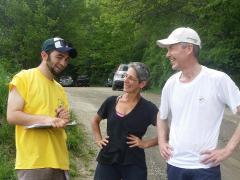
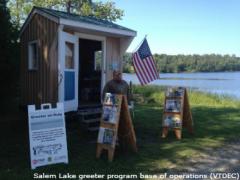
Visitors to Waterbury Reservoir may have encountered something new at the lake this year: a nice young man with a yellow “Public Access Greeter” shirt on. This summer was the inaugural year for a Public Access Greeter Program at Waterbury Reservoir (FWR), which was established by Friends of Waterbury Reservoir with assistance from the Vermont Department of Environmental Conservation’s aquatic nuisance species grant-in-aid program. A part-time greeter, along with a motivated group of volunteers from FWR, offered invasive species education and boat inspections at multiple launch sites around this aquatic gem in central Vermont.
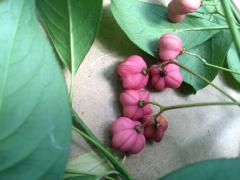
The growing season for 2016 saw many projects across the state tackling the forest, field, and wetland health issue of non-native invasive plants. Below are highlights of some of these amazing local efforts. Huge thanks to everyone who is working toward making our Vermont landscapes healthier and more resilient, and protecting them for generations to come.

The Mapping for Healthy Forests (M4HF) pilot project continues to build momentum, with our volunteers collecting over 2,200 observations of non-native invasive plants, across 120+ Vermont towns. Making huge waves in eastern VT, is Superstar Volunteer, Tom Norton. A retired engineer, Tom now spends his time as a musician, gardener, naturalist, and land steward. He is moved by the desire to see biodiversity across the 200 acres of forested land he stewards in Thetford and Hartford.

The numbers of Forest Tent Caterpillar, a native insect that feeds on hardwoods, are on the rise. The Department of Forests, Parks and Recreation (VT FPR) monitors Forest Tent Caterpillar. Trap catches this year increased compared to last year in 12 of 13 sites. Populations seem to be growing across the state. The 2016 aerial survey mapped at least 24,500 acres of FTC defoliation. Heaviest defoliation occurred in Essex, Lamoille, Orleans and Caledonia counties.